New to the area? Start with our full guide to moving to Greenville, NC.
See related reading on our site.
Is Greenville NC Right For You? A Local Guide
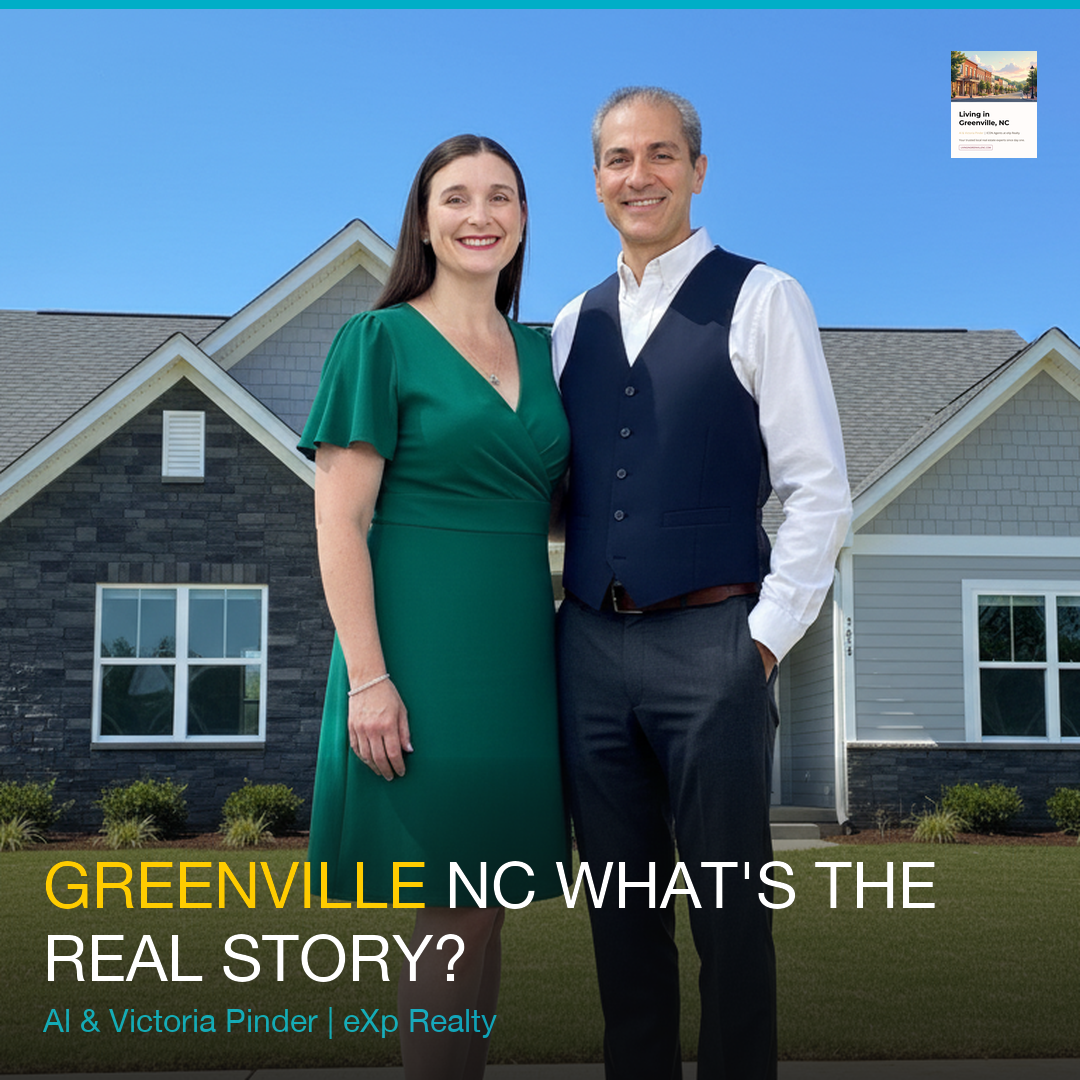
Greenville, North Carolina, offers a dynamic blend of economic opportunity, relative affordability, and a rich array of amenities that could make it the perfect place for you. But deciding if a city is the right fit means digging deeper than just the headlines. As ICON agents at eXp Realty and top real estate agents in Greenville NC, Al and Victoria Pinder have helped countless families and professionals make this very decision. We understand you want real, specific insights into what living here is actually like, covering everything from the housing market to the cost of living and the unique character of its neighborhoods. Our goal with this complete Greenville NC guidebook is to equip you with the knowledge you need to confidently assess if this vibrant Eastern NC city aligns with your goals.
If you’re currently considering a move, you’re not alone. The Greenville NC area continues to attract attention from across the state and beyond, thanks to its stable economy anchored by major institutions. But what are the tangible benefits, and what are the less talked-about challenges? We’ll break down the real estate landscape, pinpoint specific neighborhood characteristics, and give you a clear picture of what to expect when you choose to call Greenville home.
What Are the Pros of Living in Greenville NC?
Many individuals and families choose Greenville NC for a compelling set of advantages that significantly enhance their quality of life and financial stability. Let’s talk about some of the most impactful ‘pros’ you’ll experience here.
Affordable Cost of Living and Housing
One of Greenville’s most attractive features is its affordability, especially when compared to larger North Carolina metropolitan areas like Raleigh or Charlotte. The median list price for homes in Pitt County is currently around $279,900. This makes homeownership accessible to a wider range of buyers, from first-time homeowners to those looking for more space without the prohibitive costs. Your dollar simply goes further here, allowing for potentially larger homes, more expansive lots, or greater financial flexibility.
Beyond housing, everyday expenses like groceries, utilities, and transportation tend to be more manageable. This lower overall cost of living allows residents to allocate more of their income towards savings, recreation, or other investments, directly impacting long-term financial goals. For a detailed look at current market dynamics, explore our latest Greenville Market Report.
Robust Economic Drivers and Job Market
Greenville’s economy is remarkably stable, largely thanks to its powerful anchor institutions. East Carolina University (ECU) and ECU Health (formerly Vidant Health) are massive employers, drawing professionals from various fields, particularly healthcare and education. This steady job market provides excellent opportunities and contributes to the city’s resilience, even during broader economic shifts.
The presence of ECU also injects a vibrant energy into the city, fueling a diverse array of businesses, from local eateries to technology startups. The healthcare sector, in particular, continues to expand, creating high-demand positions and attracting skilled talent. This consistent growth ensures a healthy local economy and a steady demand for housing.
Access to Amenities and Recreation
Despite its more relaxed pace, Greenville offers a surprisingly rich array of amenities and recreational opportunities. You’ll find a thriving culinary scene with diverse restaurants, from fine dining to casual local favorites. The city boasts numerous parks, greenways, and outdoor spaces perfect for walking, biking, and enjoying nature. The Greenville Greenway system is expanding, offering miles of trails for recreation and alternative transportation.
For those who love to travel or explore, Greenville’s location is a significant ‘pro.’ You’re only about an hour and a half drive from the capital city of Raleigh, offering access to its extensive shopping, cultural events, and airport. Even better, you’re typically just two hours away from North Carolina’s beautiful Outer Banks beaches, making weekend getaways to the coast entirely feasible. This proximity to both urban centers and coastal retreats gives residents the best of both worlds.
Understanding the Greenville NC Real Estate Market
Navigating any real estate market requires specific, up-to-date information, and Greenville NC is no exception. As local real estate experts, Al and Victoria Pinder monitor these trends closely to provide you with a clear picture. Here’s what you need to know about the current landscape.
Current Inventory and Market Dynamics
As of this update, Pitt County and Greenville collectively show approximately 590 active listings. This inventory provides buyers with a good selection without feeling overwhelmed or facing extreme competition. The median list price stands at about $279,900, reflecting a market that offers strong value. Homes are spending a median of 50 days on the market, indicating a balanced environment where properties are selling steadily, but buyers still have time for due diligence.
We’ve even seen 2 new listings appear in just the last 24 hours, highlighting consistent market activity. This ‘just-in-time’ inventory flow means that fresh opportunities are continually emerging for eager buyers. Understanding these numbers is basically critical for making informed decisions whether you are buying or selling.
New Construction Trends and Opportunities
Greenville NC is experiencing a robust period of new construction, especially in key areas like Winterville and along the Firetower Road corridor. These developments are redefining luxury and modern living in Pitt County, offering homes with contemporary designs, energy-efficient features, and desirable open floor plans. Builders are focusing on delivering high-quality residences that meet the demands of today’s buyers, from spacious kitchens to smart home technology.
For buyers seeking custom estates with larger footprints, Star Hill Farm is a notable area, providing opportunities for 1-5 acre custom builds. This diversity in new construction ensures that whether you’re looking for a turn-key suburban home or a more expansive, bespoke property, Greenville has options to explore. These new communities often come with desirable amenities, from walking trails to community greenspaces.
Established Neighborhoods and What They Offer
Beyond new construction, Greenville boasts a variety of established neighborhoods with their own unique charm and character. Ironwood, for instance, is a premier golf course community offering upscale living with mature landscaping and well-maintained properties. Brook Valley is another well-regarded area known for its strong community feel and access to local amenities.
These established areas often feature homes with different architectural styles and larger, more established yards. They provide a sense of history and community that newer developments are still building. When you’re considering a move, evaluating both new and established neighborhoods is basically key to finding the perfect fit for your lifestyle and preferences. For those moving with children, our Moving with Kids guide offers additional insights into community aspects.
To help you visualize the market, here’s a quick comparison of some Pitt County areas:
| Area | Median List Price | Median Days on Market | Key Characteristics |
|---|---|---|---|
| Greenville | $279,900 | 50 | Diverse options, urban & suburban, ECU/ECU Health focus |
| Winterville | $350,000 | 45 | Growing, new construction, suburban feel, larger lots |
| Ayden | $250,000 | 60 | Quaint town feel, more rural, strong community |
| Farmville | $260,000 | 55 | Small-town charm, historic areas, close-knit community |
| Grimesland | $285,000 | 58 | Rural setting, quiet, larger land parcels often available |
What Are the Cons or Challenges of Moving to Greenville NC?
Every city has its drawbacks, and Greenville NC is no exception. Understanding these potential challenges upfront is basically part of making an informed decision. While many ‘cons’ are subjective, some are more commonly cited by new residents.
Traffic Congestion in Peak Hours
Like any growing city, Greenville experiences traffic congestion, particularly during peak commuting hours. Specific routes, especially around the ECU campus, ECU Health facilities, and major retail corridors like Firetower Road, can become slow. While not on the scale of larger metros, if you’re used to open roads, this can be an adjustment. Planning your commute times or choosing a home closer to your workplace can mitigate this factor significantly.
The city has invested in infrastructure improvements, but with continued growth, navigating certain areas during rush hour requires patience. This is especially true if you’re traversing the city from one end to another during the typical 7-9 AM or 4-6 PM windows.
Limited Public Transit Options
Greenville is largely a car-dependent city. While there are some public transportation options, they are not as extensive or as frequently available as in larger cities. This means most residents rely on personal vehicles for daily commuting, errands, and social activities. If you prefer walking, biking, or using public transit extensively, you’ll need to carefully consider your chosen neighborhood’s proximity to essential services and your workplace.
While the city has a burgeoning greenway system, it’s primarily for recreation rather than comprehensive transportation. This can be a ‘con’ for those who prefer to minimize their reliance on a car or are coming from areas with robust public transit networks.
Climate Considerations
Eastern North Carolina experiences hot and humid summers. Temperatures regularly reach into the 90s (Fahrenheit) with high humidity, which can be an adjustment for those accustomed to drier climates. Air conditioning is basically a necessity during these months, and outdoor activities often shift to early mornings or evenings.
While winters are generally mild, the humidity can make cooler temperatures feel colder than the actual reading. The area is also susceptible to tropical weather systems, which can bring heavy rains. If you’re not used to significant humidity or the occasional hurricane season precaution, these climate factors are important to consider.
How Does Greenville NC Compare to Other NC Cities?
When you’re evaluating a move, comparison is key. Greenville NC offers a distinct experience compared to its larger North Carolina counterparts like Raleigh, Charlotte, or even coastal Wilmington. Understanding these differences can solidify your decision.
Cost of Living: Greenville vs. Raleigh/Charlotte
The most significant difference you’ll notice is the cost of living. Greenville consistently ranks as one of North Carolina’s more affordable mid-sized cities. Housing costs, as previously mentioned with a median list price around $279,900, are substantially lower than in Raleigh (where median home prices can easily be in the $400,000s or higher) or Charlotte. This disparity extends to rental prices, property taxes, and general consumer goods.
For professionals seeking excellent career opportunities without the steep price tag of larger metros, Greenville offers an attractive balance. You can achieve a higher standard of living, often with more space and less financial strain, than would be possible in the state’s major hubs. This allows for greater savings or a higher disposable income for other life pursuits.
Pace of Life and Community Feel
Greenville generally offers a more relaxed pace of life compared to the constant hustle and bustle of Raleigh or Charlotte. While it has the energy of a growing city, it retains a welcoming, community-oriented atmosphere. Many residents appreciate the ability to escape the traffic and crowds without sacrificing access to modern amenities and services. It’s a place where you can often make stronger community connections.
The presence of ECU gives Greenville a youthful vibrancy, yet it still maintains a strong sense of local identity. If you’re looking for a city that blends metropolitan conveniences with a friendly, ‘small-town’ feel (though it’s certainly not a small town), Greenville often hits that sweet spot. It provides a unique balance that many find appealing.
What Neighborhoods Should You Explore in Greenville NC?
Greenville and Pitt County offer a diverse array of neighborhoods, each with its own character and appeal. Your choice of neighborhood will basically shape your daily experience, so it’s essential to explore options that align with your priorities. Here are some key areas worth considering:
1. Winterville: Modern Living and New Construction
Winterville has emerged as a prime destination for those seeking newer homes and a vibrant, growing community. We are seeing a surge in high-end new construction in Winterville that is redefining luxury for Pitt County. This area offers a blend of suburban tranquility with excellent access to retail, dining, and major roadways. You’ll find a variety of home styles, from spacious family residences to modern townhomes, often on generous lots. Winterville is particularly appealing to buyers looking for updated amenities and contemporary designs. For specific market data on this thriving area, check out Winterville Homes.
2. Firetower Road Area: Convenience and Diversity
The Firetower Road corridor is a highly sought-after area known for its convenient location and diverse housing options. It provides excellent access to ECU Health, major shopping centers, and a wide selection of restaurants. This area features a mix of established homes and newer developments, offering choices for various budgets and preferences. If your commute to key employment centers is a top priority, the Firetower Road area offers unbeatable convenience.
3. Star Hill Farm: Custom Estates and Space
For buyers dreaming of custom-built homes on larger parcels of land, Star Hill Farm stands out. This area offers opportunities for custom estates on 1-5 acre lots, providing ample space and privacy. It’s a fantastic option for those who desire a more bespoke living experience, allowing them to design a home tailored precisely to their specifications. Star Hill Farm represents a unique segment of the Greenville market for discerning buyers.
4. Ironwood: Golf Course Living
If golf course living is on your wish list, Ironwood is Greenville’s premier community. This established neighborhood features beautiful homes set along well-maintained fairways, offering picturesque views and a serene atmosphere. Ironwood provides an upscale living experience with mature landscaping and a strong sense of community. It’s ideal for those who appreciate recreational amenities right outside their door.
5. Brook Valley: Established Charm and Community
Brook Valley is another well-established neighborhood known for its mature trees, well-maintained homes, and a strong, friendly community feel. It offers a mix of classic architectural styles and is valued for its stability and welcoming atmosphere. Residents enjoy good access to local parks and amenities, making it a comfortable and convenient place to live.
6. Neighborhoods Near ECU Health: Commute-Focused Living
For medical professionals relocating to Greenville, proximity to ECU Health is often a key factor. Several neighborhoods offer excellent commute times, ranging from walkable distances to a short drive. These areas provide convenience and minimize travel time, allowing healthcare workers to focus on their demanding careers without a lengthy commute. We can help you identify the best options based on your specific workplace within the ECU Health system.
What Is the Cost of Living in Greenville NC?
Understanding the overall cost of living is basically critical when considering a move. Greenville NC offers a distinct advantage in this area, but it’s important to break down the specifics beyond just median home prices.
Property Tax Rates by Zip Code
Property taxes in Pitt County are generally considered reasonable. The tax rate is set by Pitt County and the City of Greenville, with slight variations depending on whether a property is within city limits or in an unincorporated area. For example, the combined county and city tax rate for Greenville residents is lower than what you might find in some other major North Carolina cities. We can provide you with the most current tax rates for specific zip codes and properties during your consultation, ensuring you have an accurate picture of your potential annual expenses. You can always verify these figures directly with the Pitt County Tax Administration.
Utility Costs and Home Maintenance
Utility costs in Greenville are generally comparable to other mid-sized cities. Electricity, water, sewer, and internet services are provided by local utility companies. Keep in mind that summer months will typically see higher electricity bills due to air conditioning use, given the area’s humidity. Home maintenance costs will vary depending on the age and size of your home, but local services are readily available and competitively priced.
HOA Fees in Planned Communities
Many of Greenville’s newer developments and planned communities, particularly in areas like Winterville and along Firetower Road, will have Homeowners Association (HOA) fees. These fees cover the maintenance of common areas, amenities like community pools or clubhouses, and often landscaping for shared spaces. HOA fees can range from modest to significant, depending on the level of services and amenities provided. It’s crucial to factor these into your monthly budget when considering homes in these communities. We will always clarify exact HOA fees for any property you’re interested in.
Your Trusted Guide to Greenville NC Real Estate
Deciding if Greenville NC is right for you involves a lot of factors, from market data to lifestyle considerations. Al and Victoria Pinder are not just real estate agents; we are local real estate experts with years of experience navigating the Eastern NC market. As ICON agents at eXp Realty, we bring a national perspective combined with deep local knowledge, ensuring you have the most accurate and insightful guidance possible. We’ve helped hundreds of individuals and families successfully make their move to Greenville, finding not just a house, but a true home and community.
Whether you’re weighing the pros and cons, seeking specific neighborhood details, or ready to start your home search, we are here to simplify the process and empower your decisions. We believe that real estate is a relationship business, and we’re committed to being your trusted advisors every step of the way. If you’re thinking about selling in Pitt County, our Home Selling Guide offers valuable insights for that process as well.
We’d love to connect with you personally and discuss your unique situation. Reach out to Al and Victoria Pinder directly — we are your trusted guides for every step of this journey. You don’t have to navigate this exciting move alone. Trust us to guide your move.
Frequently Asked Questions
Is Greenville North Carolina a good place to live?
Greenville, North Carolina, offers a strong job market, especially in healthcare and education, along with an affordable cost of living. It provides a balanced lifestyle with access to diverse amenities, green spaces, and a vibrant community feel. Many residents appreciate its blend of urban conveniences and a relaxed pace, making it an attractive option for many.
What is the median home price in Greenville NC?
As of 2026, the median list price for homes in Greenville NC and Pitt County is approximately $279,900. This figure can vary by neighborhood and home type, with new construction in areas like Winterville typically listing higher. This affordability is a key draw for buyers relocating from more expensive markets.
What are the job opportunities like in Greenville NC?
Greenville NC has a robust job market primarily driven by East Carolina University (ECU) and ECU Health. These institutions offer numerous opportunities in healthcare, education, research, and administration. The city also has a growing retail sector and various local businesses contributing to a stable employment landscape, attracting professionals from many fields.
How far is Greenville NC from the beach?
Greenville NC is conveniently located approximately two hours from the Outer Banks beaches, making coastal getaways easily accessible. Popular destinations like Emerald Isle, Atlantic Beach, and the Crystal Coast are within a reasonable driving distance, offering residents a chance to enjoy North Carolina’s beautiful coastline.
Are there good neighborhoods for new construction in Greenville NC?
Yes, Greenville NC features several excellent neighborhoods with significant new construction activity. Winterville and the Firetower Road area are particularly popular, offering modern homes with contemporary designs and amenities. Star Hill Farm also provides opportunities for custom estates on larger lots, catering to buyers seeking a tailored living experience.
What are the main transportation options in Greenville NC?
Greenville NC is primarily a car-dependent city, with most residents relying on personal vehicles for transportation. The city has a limited public transit system, and while walking and biking are popular for recreation, they are less comprehensive for daily commuting across the entire city. Planning for personal vehicle use is advisable for most residents.
Related: Winterville NC real estate guide
Related: Homes for sale in Ayden NC $400K–$500K
Related: Homes for sale in Ayden NC under $200K
Related: Best neighborhoods in Greenville NC — the full guide
What is the climate like in Greenville NC?
Greenville NC experiences a humid subtropical climate. Summers are hot and humid, with temperatures often in the 90s Fahrenheit. Winters are generally mild, though cool and damp. The area is also subject to tropical weather systems during hurricane season, which brings increased rainfall. Air conditioning is essential for comfort during the warmer months.
Ask Your AI About Greenville Homes
Search Greenville-area homes for sale and town market numbers inside Claude, ChatGPT, Grok, or your favorite AI, with daily NCRMLS data and a link back to every listing.